


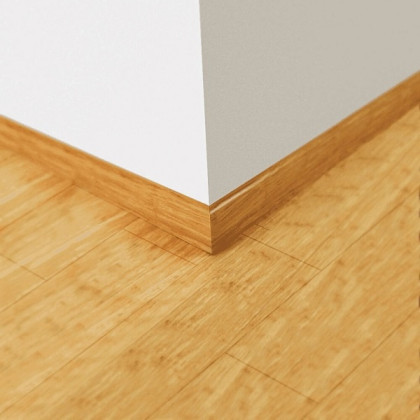


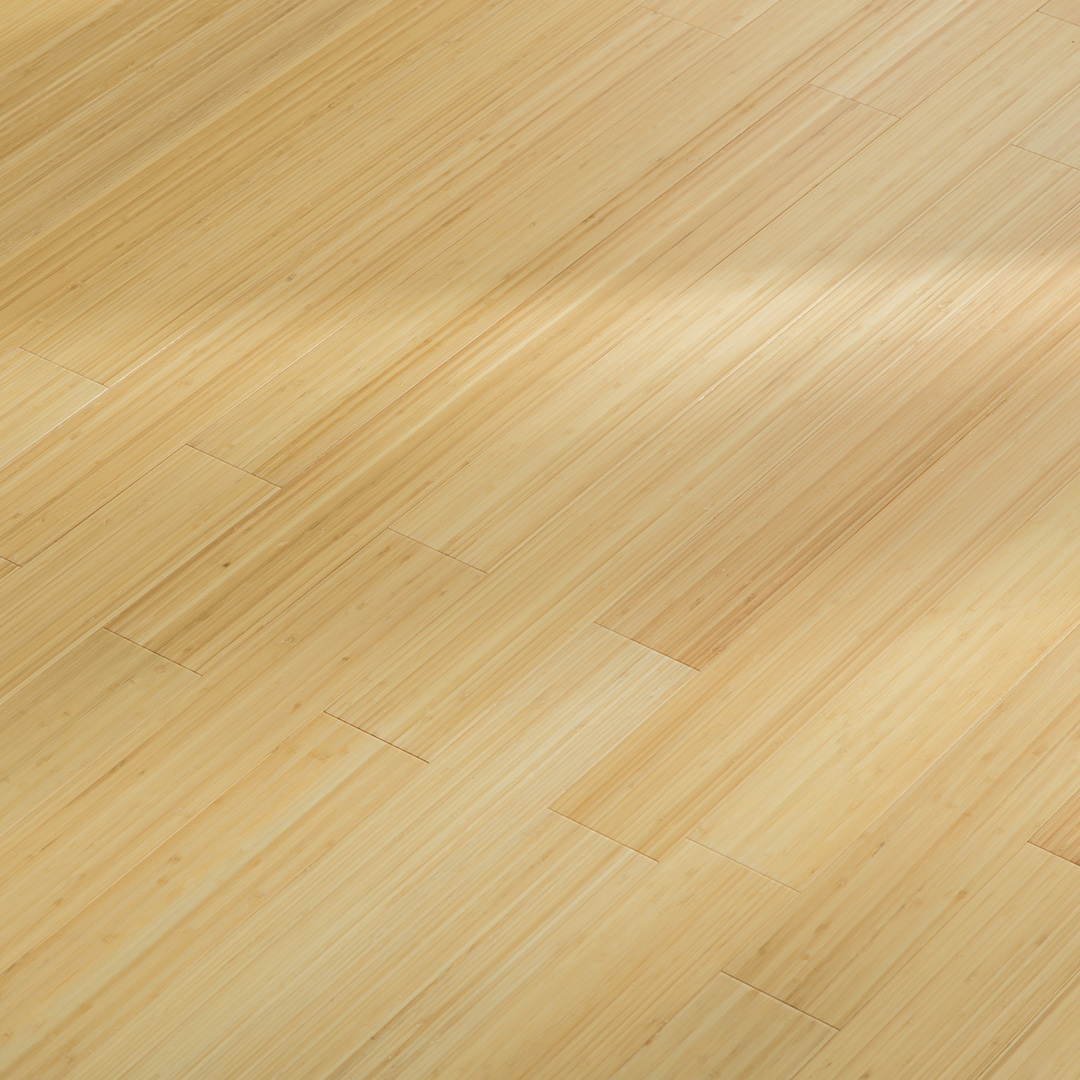
Vertical natural solid bamboo flooring offers a calm, finely detailed surface that highlights the pure, untouched beauty of bamboo. To show what makes this material appealing, it helps to start with the basics of solid bamboo flooring. Solid bamboo flooring is produced by slicing mature bamboo culms into long strips, removing the outer skin, treating the strips to eliminate starches and impurities, drying them to the correct moisture level, and laminating them under high pressure. These laminated blocks are then milled into strong, uniform planks. Because the material is solid all the way through—rather than layered like engineered flooring—it has a stable density and a sturdy, reliable feel underfoot. This structure allows it to perform consistently in everyday living environments, maintaining both strength and appearance over an extended period.
Vertical grain is one of the defining features of this product. When creating a vertical‑grained board, the bamboo strips are turned on their sides so their narrow edges face upward during lamination. As the strips align in tight rows, the surface develops a fine-lined texture that runs smoothly along the length of each plank. This gives the floor a refined, structured look with subtle variations rather than broad patterns or prominent nodes. The grain expresses itself through gentle linear markings that offer a balanced, uniform aesthetic. Many people appreciate vertical grain for its quiet elegance and its ability to complement interiors that favor simplicity and clean lines. This grain orientation also contributes to the extreme stability of the board, as the vertical arrangement of fibers helps reduce the chance of lateral expansion.
The natural color brings another meaningful dimension to the material's appeal. Natural bamboo retains the soft, light tones that come directly from the plant itself. Instead of being altered by heat or staining, the color reflects the creamy, pale golden shade that bamboo develops in its mature stage. This clarity of tone enhances the fine grain and helps brighten interior spaces. Natural bamboo flooring pairs easily with modern, traditional, Scandinavian, and coastal décor because it acts as a neutral foundation while still offering a warm, organic feel. The absence of artificial coloring also highlights the authenticity of the bamboo fibers, allowing their inherent character to stand on its own.
Vertical natural solid bamboo flooring is available in several practical and visually appealing sizes. Standard thicknesses typically range from about 10 to 15 millimeters, giving homeowners and installers flexibility depending on the subfloor and installation preferences. Widths usually fall between 96 and 130 millimeters, although custom widths can be produced for special projects. Lengths vary from short boards that create lively visual movement to long planks that stretch across a room with a smooth, uninterrupted flow. These size options allow the flooring to adapt to compact rooms, wide hallways, large living areas, and commercial spaces. With multiple dimensions available, designers can influence the spatial impression of a room—wider boards offer a broader feel, while narrower boards add rhythm and structure.
The manufacturing process follows a disciplined series of steps that protect the integrity of the bamboo and ensure the flooring performs reliably. Production begins with selecting bamboo culms that have reached five to six years of age, a period when fiber hardness and density reach their peak. After harvest, the culms are cut into strips, the outer skin is removed, and the material undergoes boiling or steaming to remove starches and eliminate pests. This treatment step improves long‑term stability. The strips are then kiln‑dried to achieve a moisture level suitable for flooring. Drying is one of the most important steps because it directly affects how well the boards maintain their shape once installed.
After drying, the strips are graded for color and quality. For vertical natural flooring, color consistency is particularly important, so sorting is done with care. The strips are arranged vertically and laminated with strong, low‑emission adhesives that meet strict environmental standards. High-pressure pressing bonds the strips into dense, durable blocks. Once the blocks cure fully, they are milled into precisely shaped planks with tongue‑and‑groove or click profiles. These profiles ensure secure connections between boards and smooth installation. Each plank then receives sanding and protective finishing coats that resist wear, stains, and moisture. Inspections at multiple points ensure that the boards meet standards for thickness, length, moisture content, surface finish, and dimensional accuracy. This thorough manufacturing path results in flooring that holds its form, keeps a steady fit, and maintains its natural beauty through extended use.
Vertical natural solid bamboo flooring brings several strong advantages to residential and commercial interiors. One of the most valued benefits is its stability. The vertical grain structure allows the boards to resist cupping and warping because the narrow edges of the strips stand upright, reducing lateral movement. This makes the floor particularly dependable in environments where humidity shifts throughout the year. Another significant advantage lies in the material’s durability. Bamboo fibers have impressive tensile strength, and when combined with the solid-laminated construction, they produce a flooring surface capable of handling daily foot traffic, furniture placement, and long-term wear without losing integrity.
The natural color also offers practical and aesthetic benefits. Because the tone is light, it helps brighten darker spaces and creates an open, airy feel. It does not rely on dyes or pigments, so the color remains authentic and consistent over time. The clean, understated appearance of natural bamboo is appealing for homeowners who prefer flooring that adapts easily to various interior themes. The subtle grain aligns with both contemporary and classic room styles, giving designers flexibility.
Environmental responsibility forms another key advantage. Bamboo grows rapidly, reaching maturity in far less time than hardwood species. It regenerates naturally after harvesting, making it a resource that supports sustainable land management. When produced with careful attention to responsible sourcing and energy‑efficient processing, bamboo flooring provides an environmentally mindful alternative to traditional wood flooring. Many buyers appreciate knowing that their flooring comes from a material with a naturally replenishing cycle.
Ease of maintenance is another practical benefit. The smooth, sealed surface of the planks makes daily upkeep simple. Sweeping and occasional damp cleaning are usually enough to keep the floor looking fresh. Because the color runs through the natural fibers without treatment or staining, minor wear tends to be less noticeable than on dark or heavily colored materials. The protective coatings applied during manufacturing help defend the surface against abrasion and light impacts.
Choosing the right supplier is essential to ensuring that all of these advantages come through in the final installation. This is where Bothbest Bamboo Flooring stands apart. The company brings extensive experience in bamboo manufacturing and places strong emphasis on the careful selection of raw materials. Only mature bamboo culms with stable fiber density enter the production line. Moisture control, a critical factor in flooring quality, is monitored at multiple points, reducing the risk of instability after installation. Adhesives, pressing pressures, and finishing systems all follow strict standards designed to support long‑term performance.
Bothbest’s attention to detail ensures that each plank meets consistent expectations for color, size, and milling precision. Installers benefit from boards that fit together smoothly, reducing installation time and minimizing waste. Customers receive flooring that remains stable, maintains its clean appearance, and performs reliably as the years pass.
The company also offers dependable customer communication. Whether a project requires customized dimensions, guidance on installation methods, or recommendations for matching different bamboo products, Bothbest provides clear, timely support. This reliability is especially valuable for builders, retailers, and homeowners who expect both product quality and service consistency.
Vertical natural solid bamboo flooring brings together a refined grain, a gentle, authentic color, and a stable, solid structure that works beautifully in a wide range of interiors. With careful manufacturing, dependable raw materials, and attentive quality control, Bothbest Bamboo Flooring offers a product that reflects both natural beauty and thoughtful craftsmanship. For buyers seeking flooring that blends understated elegance, durability, and trustworthy sourcing, this material offers a dependable and appealing solution.
Caramel Strand Woven Bamboo Flooring
600W TOPCon Solar Panel
Horizontal carbonized solid bamboo flooring
Vertical natural solid bamboo flooring